
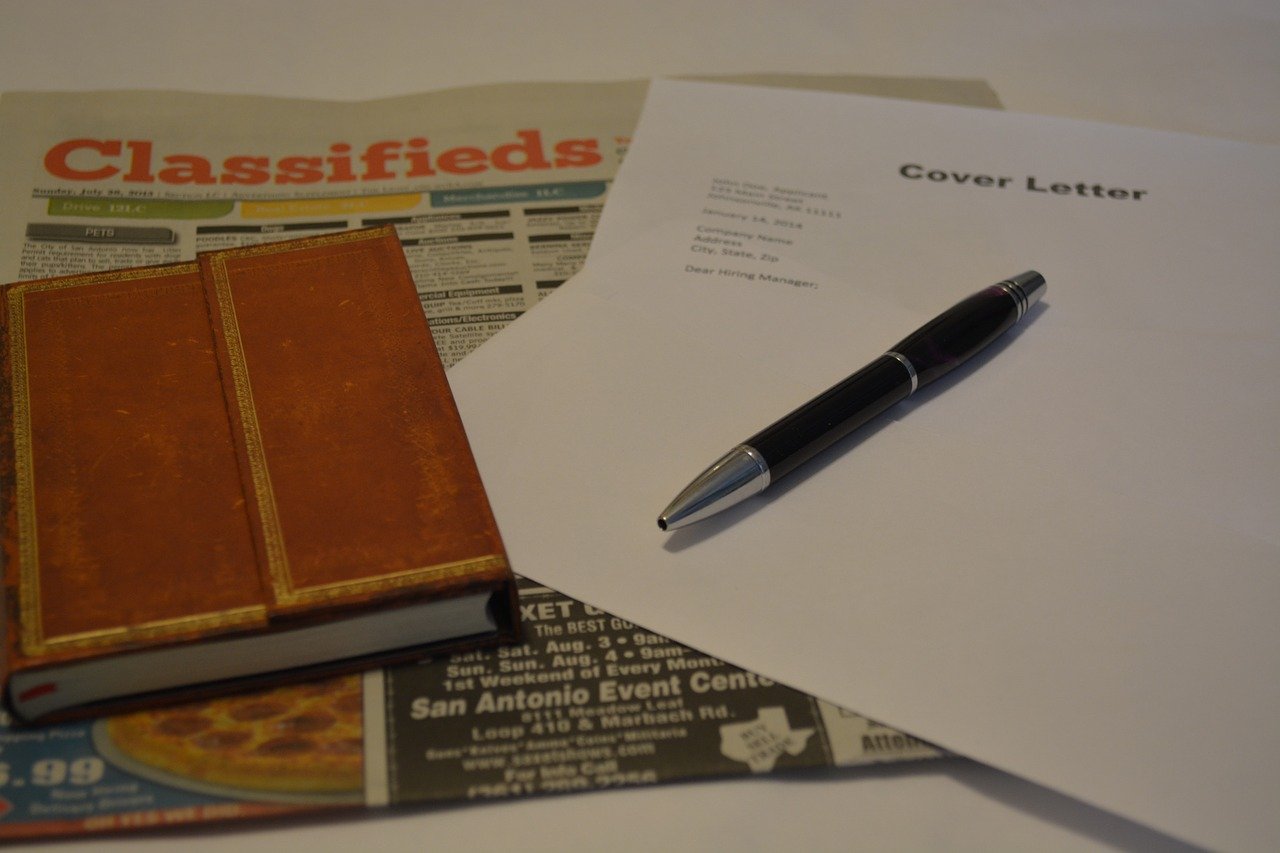
Not only does the cover letter introduce you to your future employers but it also provides them with a writing sample. Use a cover letter to clearly communicate why you are a perfect fit for the job you are applying to and what value you’ll bring.
The Purpose of a Cover Letter
A cover letter does what a resume cannot. It provides context, narrative, and intent. In an era of mass applications, it signals to a hiring manager that you are genuinely invested in their organization. Serving as your first official work sample, it bridges the gap between your history and their future goals, allowing you to demonstrate your communication style, critical thinking, and cultural alignment through real examples.
Why It Matters
Hiring managers are looking for fit. They want someone who can fit with the job requirements, the team, and the organization. Since resumes only talk about skills and experience, a cover letter lets you demonstrate your fit in other areas. This is your opportunity to show how you'll shine.
Tips for a Standout Cover Letter
- Error-Free: Typos or grammatical mistakes can disqualify you. Proofread and grammar-check before submitting it.
- Brevity: Keep it under one page. Three paragraphs is recommended.
- Easy to Read: Bullet points can help you highlight what's most important.
- Tailored: Customize it for the job opening.
- Personalized Salutation: Address it to the hiring manager if possible. If not, you can replace the salutation with a subject heading or use "Dear Hiring Manager for X position"
Recommended Format
- First Paragraph: Mention how you found the job, any mutual connections, and your interest in the position and company.
- Middle Paragraph: Highlight your qualifications, accomplishments, and how you add value. If your experience isn't an obvious fit, explain why you're still an excellent candidate.
- Final Paragraph: Summarize your qualifications and include a call to action, such as, “Please contact me to discuss how I can contribute to your team.”
Final Touch
Always tailor your cover letter to the job description. Mention the organization and job title by name in the first paragraph. Use bullet points in the middle paragraph to relate your experience to the job description.
Example Cover Letter
A cover letter for this research assistant position where you don't know the hiring manager could look something like the this:
April 30, 2024
RE: Research Assistant, International Trade and Finance
I discovered this position through the University of Maryland’s Department of Economics and am excited to apply for the Research Assistant position within CRS’s International Trade and Finance section. My coursework in international trade, finance, and statistical methods has prepared me to deliver the well-informed, accurate, and timely policy analysis that Congress relies on.
Through my economics coursework, I completed numerous policy papers and summaries requiring qualitative and quantitative analysis, data visualization in [Insert Tool, e.g., Excel/Stata], and rigorous evaluation of research methodologies. I maintain a sharp focus on the global policy landscape and offer the following relevant experiences:
- Collaborating on team projects focused on legislative tracking, policy synthesis, and strict quality control.
- Creating and maintaining structured databases as an office assistant to streamline data access and information retrieval.
- Preparing presentation materials and tracking audience engagement for events that boosted student group membership by 20 percent.
I am deeply drawn to CRS's mission of providing objective, nonpartisan analysis to Congress. I would be honored to contribute my research, data, and writing skills to your collaborative team. I look forward to discussing how I can support the International Trade and Finance section.
Sincerely,
E. Con Student
Resources
The Feller Center has created a cover letter checklist for you to use which includes a great example for an ECON student.
If you would like a cover letter template in the same style as our ECON Resume Template, you can download that here.
Using AI and Online Research to Write Effective Cover Letters
Writing cover letters can feel daunting and time-consuming, so it’s tempting to let AI tools do all the work. But relying entirely on AI can backfire. It often produces generic letters that fail to reflect your unique voice or qualifications. In some cases, employers even receive nearly identical letters from multiple applicants, which can hurt your chances of getting an interview.
While it's okay to look at samples or templates for inspiration, avoid copying cover letters you find online. At best, they’ll sound inauthentic; at worst, they could raise concerns about plagiarism. Your cover letter should reflect your own experiences, personality, and goals.
Below are strategies to leverage AI and the internet in the cover letter writing process:
-
Start with Research. Use the internet to learn about the organization’s mission, culture, and recent news. Referencing this in your letter shows initiative and genuine interest.
-
Use AI for Skill Identification. Copy the job description into an AI tool and ask: “What are the most important skills and qualifications for this job?” This helps you align your experience with what the employer wants.
-
Draft, Then Refine with AI. Write your first draft, then use AI for suggestions on how to better match your letter to the job description. Don’t let it rewrite it for you since that will replace your style and replace it with something more generic. Just ask for feedback. AI actually excels in this area so take advantage of this strength.
-
Customize the Edits. Only use edits that feel authentic to your experience and voice. Avoid anything that doesn’t sound like you.
-
Proofread and Polish. Ask AI to check for grammar, spelling, and clarity. This can help you avoid small errors that leave a bad impression.